
-
19Altered Rationality? Integrating Psychedelic Experiences Into Rational Thinking Through the Critical Anchor ApproachPhilosophy Psychiatry and Psychology 33 (1): 57-73. 2026.This paper examines delusions and psychedelic experiences as sources of both epistemic risk and benefit. Although these states are often seen as irrational or pathological, the paper explores their potential epistemic and psychological benefits, such as fostering emotional adaptation and creativity. The paper cautions against interpreting subjective experiences as metaphysical truths, which risks epistemic overreach and social disconnection. By introducing the Critical Anchor Approach, which emp…Read more
-
13Epistemic Autonomy, Metaphysical Restraint, and Mindfulness in Psychedelic-assisted TherapyPhilosophy Psychiatry and Psychology 33 (1): 83-89. 2026.
-
29Epistemic Autonomy, Metaphysical Restraint, and Mindfulness in Psychedelic-assisted TherapyPhilosophy Psychiatry and Psychology. forthcoming.
-
218What must be the case, in the weakest intelligible sense, for something to count as alive? This paper develops a phenomenological-formal approach to that question. Beginning from the conditions under which a unity can be apprehended as persisting through time, it constructs the concept of life by progressive formal restriction rather than by appeal to empirical biological criteria. The construction proceeds through four conditions: persistence (P), affectability (A), intrinsic self-maintenance (…Read more
-
197What must be added to a minimal concept of life in order to arrive at a minimal concept of evolution? Building directly on the concept of life as intrinsically self-maintained persistence of a functionally individuated unity, this paper argues that evolution requires three supplementary conditions beyond life: generative continuity, heritable variation, and differential retention. These conditions are formally developed through a two-level account. Minimal evolution is lineage persistence under …Read more
-
1This paper-draft develops a minimal formal concept of life through a phenomenological-formal analysis of persistence across time. It begins by reconstructing the conditions under which a unity can be apprehended as the same through changing phase-presentations, and then progressively strengthens this basis through four formal predicates: persistence, affectability, intrinsic self-maintenance, and functional individuation. The central claim is that life, in its weakest intelligible sense, is intr…Read more
-
186This work begins with the least that can be said with minimal presupposition. It does not begin with matter, world, object, subject, or theory. It begins only with appearance. Here, appearance names what is given; experience names the wider field within which such givenness can vary, be related, and be transformed. From that minimum, it proceeds by strict steps. Each concept is introduced only when required by what has already been established. Nothing is assumed that is not needed. Nothing is a…Read more
-
54Altered Rationality? Integrating Psychedelic Experiences Into Rational Thinking Through the Critical Anchor ApproachPhilosophy Psychiatry and Psychology. forthcoming.This paper examines delusions and psychedelic experiences as sources of both epistemic risk and benefit. Although these states are often seen as irrational or pathological, the paper explores their potential epistemic and psychological benefits, such as fostering emotional adaptation and creativity. The paper cautions against interpreting subjective experiences as metaphysical truths, which risks epistemic overreach and social disconnection. By introducing the Critical Anchor Approach, which emp…Read more

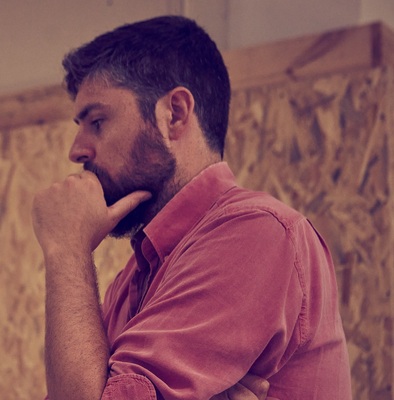
Lucas F. Borkel
Universidad de las Palmas de Gran Canaria
Tech University
-
Tech UniversityRegular Faculty
-
Asociación Científica PsicodélicaOther
Las Palmas de Gran Canaria, Province of Las Palmas, Canary Islands, Spain
Areas of Specialization
| Metaphysics and Epistemology |
| Science, Logic, and Mathematics |
| Natural Sciences |
| Cognitive Sciences |