
-
32Virtual Post-apocalypses between Flame-hair Saviours and Useless Heroes. Analysing the Future of Humanity and Nature in the Video Game Series Horizon and The Last of UsFuturi. Rivista Italiana di Futures Studies (Spring 2026 Special Issue): 73-87. 2026.We are already living in the apocalypse. Wars, nuclear threats, and environmental and humanitarian crises shape our present, with the Doomsday Clock now only 85 seconds from midnight. As Webley writes, “the apocalyptic mood has returned to haunt us. [...] It’s already here, if we choose to look; we can see it clearly” (2020, pp. 270-271). Among these threats, global warming and its resulting ecological disasters appear both imminent and inevitable. In response, dystopian fiction has gained tract…Read more
-
8Masks, Values, and Society. The Evolution of Superheroes into Antiheroes Since the Dark AgeIn Danny Graydon & Torsten Caeners (eds.), Superheroes and Contemporary Cultures. Cross-Medial Explorations and Societal Perspectives, Intellect. pp. 81-96. 2026.Unhappy is the land that needs an antihero for it is a land in crisis, without a clear morality, without truths. The antihero embodies competing values: on the one hand, antiheroes and antiheroines are born of a crisis; on the other, they exasperate it. Antiheroes could not exist without a crisis of values and worldviews. They reveal it through their very existence. To be an antihero, it is fundamental that the heroic model remains present, even in its absence. Brombert states: ‘the antihero can…Read more
-
14Marvels or Freaks, Monsters or Heroes?In Jeff McLaughlin (ed.), The Philosophies of Stan Lee Essays on a Comics Mastermind, Mcfarland. 2026.Superheroes are more than mere entertainment: like the mythological heroes they descend from, they carry symbolic, psychological, and philosophical implications, functioning as archetypes and iconic representations of the values and moral frameworks of their cultures. Yet the concept of the "superhero" is not immutable. While contemporary superheroes share certain traits with their Golden Age predecessors, their transformation over the decades has been profound, mirroring the evolution of Wester…Read more
-
834Devil in Heaven: The Role of Matt Murdock's Parents and Friends in the Creation of Daredevil's IdentityHeroism Science 10 (2): 1-34. 2025.Traumas and losses mark superheroes´ lives from the beginning. Often orphans, superheroes start their journey with the loss of a paternal or maternal figure. This tragedy destroys their previous world and identity, but it also gives them a purpose. The superhero character, Daredevil, is no exception; he experiences loss and pain, too. Matt Murdock’s life is marked by the death of many people close to him, starting with the loss of his father, which leaves the deepest scar on him. The assumption …Read more
-
21Batman´s Villains and Villainesses: Multidisciplinary Perspectives on Arkham´s Souls (edited book)Lexington. 2023.While much of the scholarship on superhero narratives has focused on the heroes themselves, Batman’s Villains and Villainesses: Multidisciplinary Perspectives on Arkham’s Souls takes into view the depiction of the villains and their lives, arguing that they often function as proxies for larger societal and philosophical themes. Approaching Gotham’s villains from a number of disciplinary backgrounds, the essays in this collection highlight how the villains’ multifaceted backgrounds, experiences, …Read more
-
510The Horror Versus L’Indagatore dell’Incubo. The Dionysian, Irrational, and Absurd in Dylan Dog’s NarrativeIn Subashish Bhattacharjee & Fernando Gabriel Pagnoni Berns (eds.), Horror and Philosophy. Essays on Their Intersection in Film, Television and Literature, Mcfarland & Company. pp. 237-249. 2023.Dylan Dog, l’Indagatore dell’Incubo (the nightmare investigator), lives and works at 7 Craven Road in London. The comic book character is English, but he was created in Italy by Tiziano Sclavi in 1986, and it is still published today monthly. Dylan had enormous success, not only in Italy but worldwide. His job is to investigate, together with his assistant, Groucho, the paranormal, the irrational, the nightmare that can assume different forms and aspects. Dylan fights against all types of monste…Read more
-
558Flesh, Scars, and Clay. The Role of Pain and Bodies in the Creation of Identity and MeaningIn Favaro Marco & Justin F. Martin (eds.), Batman’s Villains and Villainesses: Multidisciplinary Perspectives on Arkham’s Souls, Lexington Books. pp. 109-121. 2023.The mask's role is central to the superhero narrative. The mask is a non-human identity, which replaces the civilian, human one; sometimes forever. It is what happens to the majority of Gotham's villains. While Batman can take off his mask and at least pretend to be Bruce Wayne, many of his enemies do not have the same privilege. For characters like Two-Face, Joker, Zsasz, and Clayface, the mask is carved directly into their bodies. Like masks, scars can replace one's identity, but deeply and so…Read more
-
390Arkham's Sirens. Analyzing the Roles of the Body and the Transcendental Subject in Arkham's Villainesses and AntiheroinesIn Favaro Marco & Justin F. Martin (eds.), Batman’s Villains and Villainesses: Multidisciplinary Perspectives on Arkham’s Souls, Lexington Books. pp. 229-244. 2023.Cartesian and Western religious and philosophical traditions distinguish the body from the mind, viewing the former as a prison or a burden. The mind (spirit, soul, rationality) is identified as good, while the body is devalued and associated with evil. Some philosophers restored the body's value: humans are not imprisoned spirits, but they are their bodies. Husserl, for example, claims that human beings are not an immaterial substance in a Körper, a physical body, but Leib, a living body that s…Read more
-
505Batman’s Villains and Villainesses: Multidisciplinary Perspectives on Arkham’s Souls (edited book)Lexington Books. 2023.While much of the scholarship on superhero narratives has focused on the heroes themselves, Batman’s Villains and Villainesses: Multidisciplinary Perspectives on Arkham’s Souls takes into view the depiction of the villains and their lives, arguing that they often function as proxies for larger societal and philosophical themes. Approaching Gotham’s villains from a number of disciplinary backgrounds, the essays in this collection highlight how the villains’ multifaceted backgrounds, experiences, …Read more

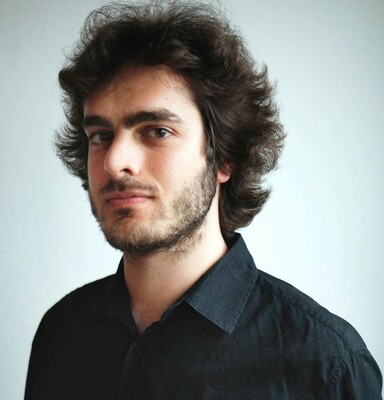
Marco Favaro
University of Europe for Applied Sciences Berlin