• PhilPapers
  • PhilPeople
  • PhilArchive
  • PhilEvents
  • PhilJobs
  • Sign in
PhilPeople
 
  • Sign in
  • News Feed
  • Find Philosophers
  • Departments
  • Radar
  • Help
 
profile-cover
Drag to reposition
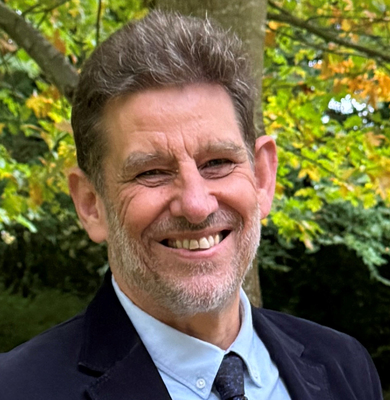
profile picture

Paul Azzopardi

University of Oxford
  •  Home
  •  Publications
    7
    • Most Recent
    • Most Downloaded
    • Topics
  •  Events
    2
  •  News and Updates
    2

 More details
  • University of Oxford
    Experimnetal Psychology, Worcester College
    Lecturer
Homepage
Oxford, United Kingdom of Great Britain and Northern Ireland
Areas of Specialization
Science of Consciousness
Science of Visual Consciousness
Consciousness and Neuroscience
Unconscious and Conscious Processes
Disorders and Syndromes of Consciousness
Consciousness and Psychology
Consciousness and Physics
2 more
Areas of Interest
Science of Visual Consciousness
Consciousness and Neuroscience
Unconscious and Conscious Processes
Disorders and Syndromes of Consciousness
Consciousness and Psychology
Consciousness and Physics
1 more
  • All publications (7)
  •  49
    Thresholds for detection and awareness of masked facial stimuli
    with Frances Heeks
    Consciousness and Cognition 32 68-78. 2015.

    Emotion and Consciousness in PsychologyScience of Visual ConsciousnessUnconscious and Conscious Proc…Read more
    Emotion and Consciousness in PsychologyScience of Visual ConsciousnessUnconscious and Conscious Processes
  •  95
    Absolute and relative blindsight
    with Tarryn Balsdon
    Consciousness and Cognition 32 79-91. 2015.
    Blindsight
  •  180
    Blindsight and visual awareness
    with Alan Cowey
    Consciousness and Cognition 7 (3): 292-311. 1998.
    Some patients with damaged striate cortex have blindsight-the ability to discriminate unseen stimuli in their clinically blind visual field defects when forced-choice procedures are used. Blindsight implies a sharp dissociation between visual performance and visual awareness, but signal detection theory indicates that it might be indistinguishable from the behavior of normal subjects near the lower limit of conscious vision, where the dissociations could arise trivially from using different resp…Read more
    Some patients with damaged striate cortex have blindsight-the ability to discriminate unseen stimuli in their clinically blind visual field defects when forced-choice procedures are used. Blindsight implies a sharp dissociation between visual performance and visual awareness, but signal detection theory indicates that it might be indistinguishable from the behavior of normal subjects near the lower limit of conscious vision, where the dissociations could arise trivially from using different response criteria during clinical and forced-choice tests. We tested the latter possibility with a hemianopic subject during yes-no and forced-choice detection of static and moving targets. His response criterion differed significantly between yes-no and forced-choice responding, and the difference was sufficient to produce a blindsight-like dissociation with bias-sensitive measures of performance. When measured independently of bias, his sensitivity to static targets was greater in the forced-choice than in the yes-no task (unlike normal control subjects), but his sensitivity to moving targets did not differ. Differences in response criterion could therefore account for dissociations between yes-no and forced-choice detection of motion, but not of static pattern. The results explain why patients with blindsight are apparently more often ''aware'' of moving stimuli than of static stimuli. However, they also imply that blindsight is unlike normal vision near threshold, and that pattern- and motion-detection in blindsight may depend on different sets of neural mechanisms during yes-no and forced-choice tests.
    Blindsight
  •  1
    Is blindsight motion blind?
    with Alan Cowey
    In Beatrice de Gelder, Edward de Haan & Charles Heywood (eds.), Out of Mind: Varieties of Unconscious Processes, Oxford University Press. pp. 87-103. 2001.
    Blindsight
  •  229
    Is blindsight like normal, near-threshold vision?
    with Alan Cowey
    Proceedings of the National Academy of Sciences Usa 94 (25): 14190-14194. 1997.
    Blindsight
  •  116
    Evaluation of a 'bias-free' measure of awareness
    with Simon Evans
    Spatial Vision. Special Issue 20 (1-2): 61-77. 2007.
    Consciousness and Psychology, Foundational IssuesAspects of Consciousness
  • Why is blindsight blind?
    with Alan Cowey
    In Beatrice de Gelder, Edward de Haan & Charles Heywood (eds.), Out of Mind: Varieties of Unconscious Processes, Oxford University Press. pp. 3-19. 2001.
    Blindsight
PhilPeople logo

On this site

  • Find a philosopher
  • Find a department
  • The Radar
  • Index of professional philosophers
  • Index of departments
  • Help
  • Acknowledgments
  • Careers
  • Contact us
  • Terms and conditions

Brought to you by

  • The PhilPapers Foundation
  • The American Philosophical Association
  • Centre for Digital Philosophy, Western University
PhilPeople is currently in Beta Sponsored by the PhilPapers Foundation and the American Philosophical Association
Feedback